 Nature-Based Solutions for Hot Cities
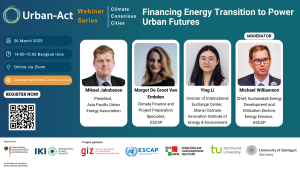 Financing Energy Transition to Power Urban Futures
 Rethinking Urban Waste: Circular Approaches to Minimize Methane Emissions
- Concept Note
- Slides
- Webinar Flyer
- Webinar Recording
 Pathways to Low Carbon People-Centred Urban Transport Systems
 Informal Settlements Driving the Transition to Climate-Resilient Cities
 Innovative Land Use Tools for Building Climate-Ready Cities
 Urban Solutions for Transboundary Air Pollution and Climate Change
 Mobilizing Innovative Climate Finance for Cities through Carbon Market Mechanisms
 Turning NDC 3.0 into Local Climate Action in Cities
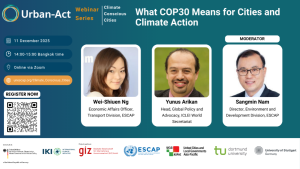 Climate Conscious Cities – What COP30 Means for Cities and Climate Action
 Digital Innovation for Smarter, Low-Carbon Urban Mobility
Accessing India’s Enabling Framework Conditions for Subnational Climate Finance
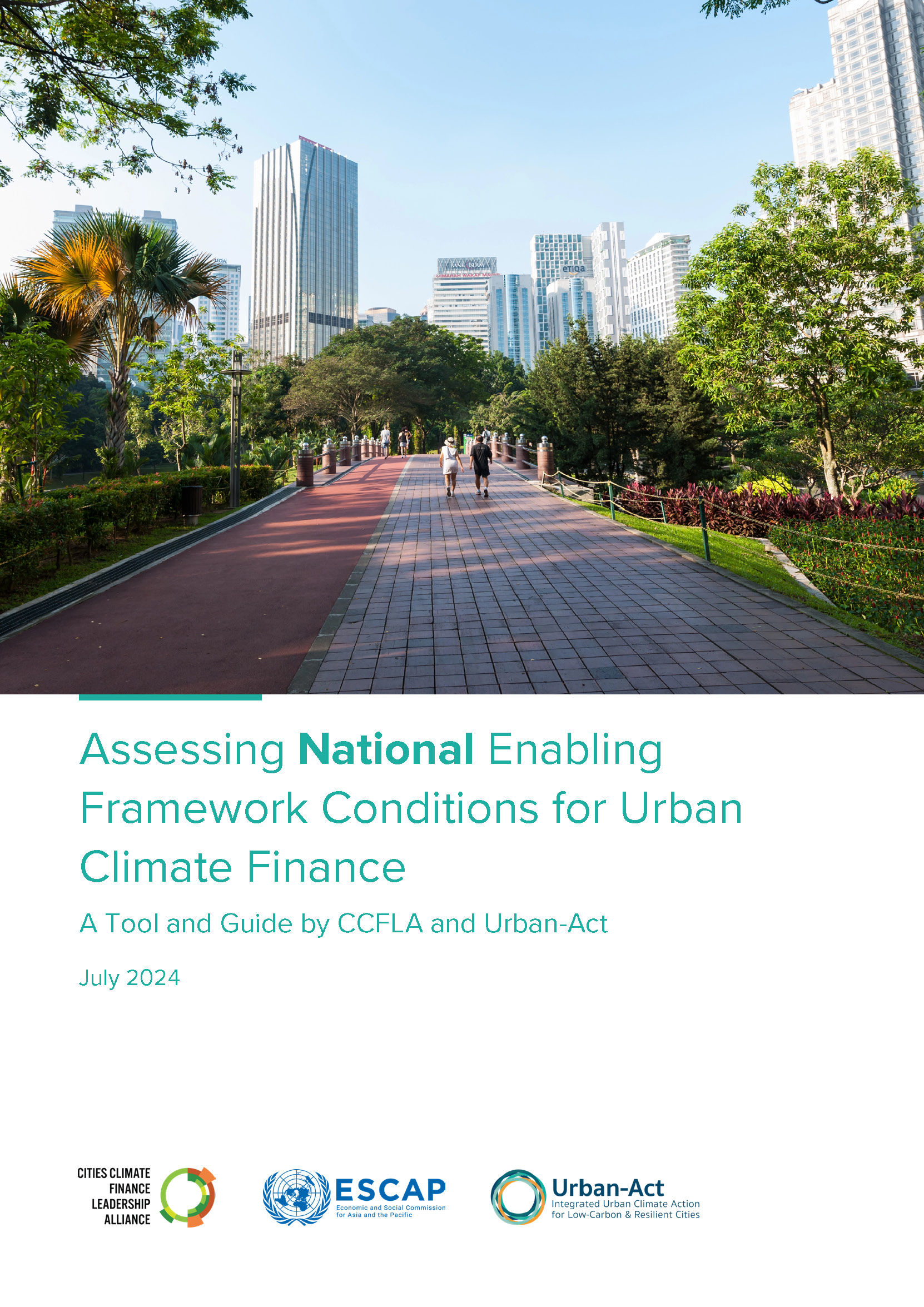
 Scaling finance for cities’ climate action requires sufficient enabling conditions at the national level. Enabling framework conditions (EFCs) can create a conducive environment for climate finance, thereby helping national and subnational entities to drive climate action and contribute to the achievement of climate goals. Such EFCs improve access to finance by creating the right policy environment, enabling cities’ access to finance, strengthening subnational climate data, and ensuring coordination from the national to the city level. This report presents findings from our pilot application in India of the CCFLA/Urban-Act National Assessment Tool, which evaluates countries’ national-level EFCs to mobilize subnational climate finance. DOWNLOAD
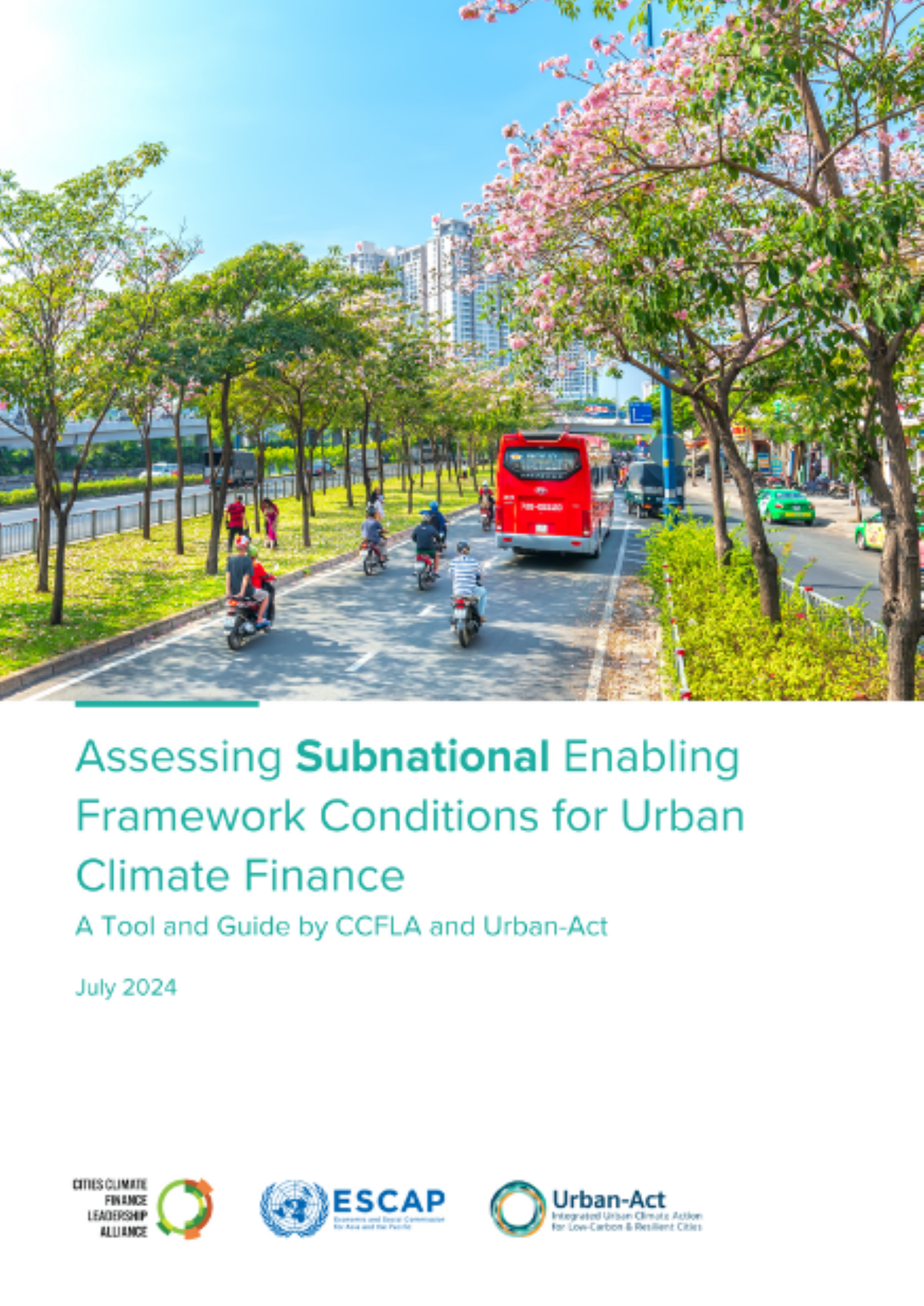
 This report presents the findings from the EFC assessment of Coimbatore. ESCAP developed a subnational EFC assessment tool under the Urban Act Project. This tool evaluates city EFCs against subnational climate finance. As part of the DA16 global project, ESCAP intends to assess and strengthen EFCs and cities’ capacities to engage in climate action.
COMING SOON
COMING SOON
COMING SOON
COMING SOON
COMING SOON
COMING SOON